Many brands place too much emphasis on building fan communities and collecting member data, assuming that strong CRM automatically increases customer lifetime value.
We do not dispute customer lifecycle theory. Especially in today’s mature, zero-growth e-commerce environment, improving retention is indeed an important part of sustainable brand development.
From a supply-and-demand perspective, however, the market clearly has an abundant supply of brands. Retail is broadly a buyer’s market, making loyalty to any individual brand difficult to secure.
Before committing significant resources to CRM, a brand first needs to satisfy consumers’ individual motivations. The Censydiam model provides a useful reference, with four broad groups:
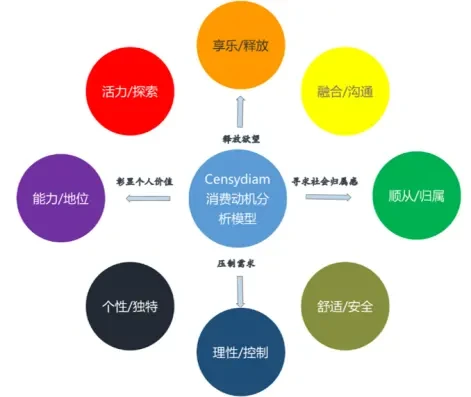
- Power/status and enjoyment/release: These are discretionary, high-value-added categories. Brands here are well suited to fan communities, but the threshold is high: marketing and service must be tightly aligned. Luxury is a typical example.
- Vitality/exploration, individuality/uniqueness, comfort/security, and communication/conviviality: These categories address relatively essential needs with moderate added value. They are clearly segmented and serve large audiences. Only brands targeting higher-spending tiers need a membership program, supported by tailored marketing and service. Examples include accessories, fast fashion, skincare and color cosmetics.
- Rationality/control and belonging/conformity: These are essential categories with generally lower added value and the broadest consumer coverage. Only top-tier brands should build membership programs, again with tailored marketing and service. Examples include personal care, household cleaning and food.
- Beyond these, two additional motivations combine essential needs with high added value: greed and fear. They touch almost every consumer. Products addressing them can generate strong stickiness, but the Matthew effect is also pronounced. Supplements are one example.
With so many international brands entering China, not every brand is suited to a membership program. Blind investment wastes resources and can become a disguised price war.
Consumers are often more loyal to sales channels than to individual brands. Major channels are fewer in number, more clearly differentiated and more precisely targeted. They therefore deserve greater attention and investment from SME brands.